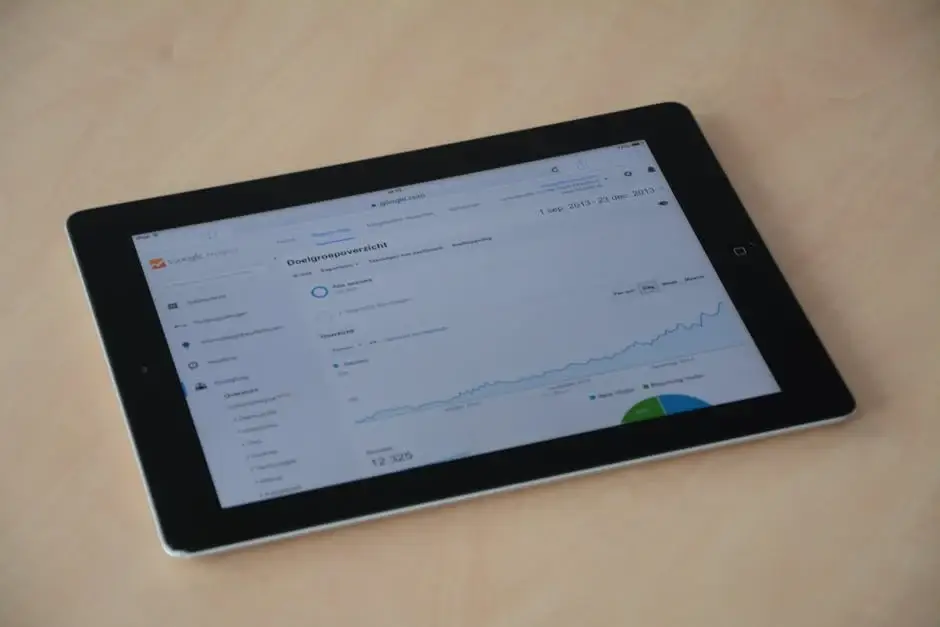
Business insights are the meaningful, actionable conclusions drawn from analyzing data. They are the difference between knowing what happened and understanding why it happened. For business owners, CEOs, and HR leaders at small and mid-sized companies, this distinction is the key to sustainable growth. By converting raw numbers into strategic clarity, leaders can identify profitable patterns and mitigate hidden risks before they impact the bottom line.
For businesses that need stronger reporting visibility, Optima Insights can help turn financial data into more useful business intelligence.
What are business insights, in plain terms?
| Concept | What It Means |
|---|---|
| Raw data | Numbers collected from transactions, systems, and operations |
| Basic reporting | Organizing that data into charts or summaries |
| Business insights | Interpreting data to reveal patterns, risks, and opportunities |
| Actionable strategy | Using those insights to make confident decisions |
Here is the short answer for anyone who wants it: business insights convert raw numbers into strategic clarity. They tell you which customers are most profitable, whether a project is running over budget, and whether your sales team attrition is quietly costing you more than you realize. They are the bridge between data and decisions.
For many growing companies, the gap between “we have data” and “we understand our business” is where millions of dollars quietly disappear. Books close late. Executives spend hours chasing reports that should take minutes. Investors ask for analytics the finance team cannot easily produce. These are not technology problems; they are insight problems.
In 2026, the organizations pulling ahead are the ones treating their financial, operational, and people data not as a record of the past, but as a real-time guide to the future. That shift, from passive reporting to active intelligence, is what this guide is about.
How Business Insights Differ from Basic Reporting
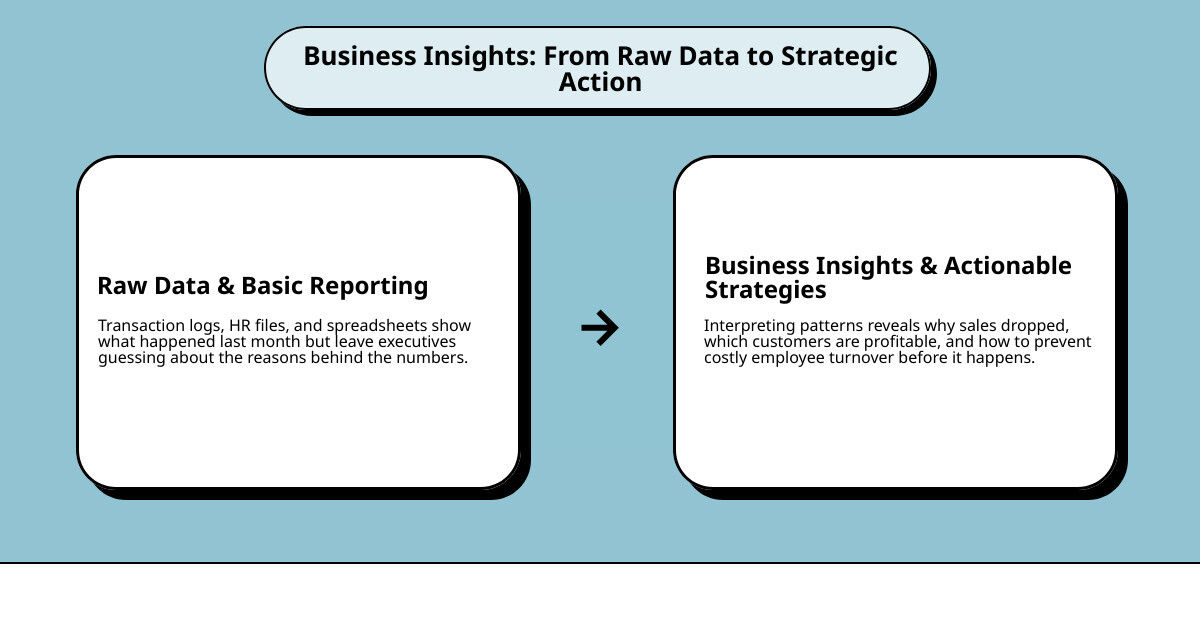
While many people use the terms interchangeably, there is a massive gulf between reporting and business insights. Reporting is descriptive; it tells us that sales were down 10% last month. Insights are prescriptive; they explain that sales were down because a specific demographic shifted their spending habits toward a competitor’s new digital offering. Reporting looks backward at what happened, while insights provide the “why” and the “how” to fix it.
True business insights require data interpretation that goes beyond a standard spreadsheet. It involves looking for meaningful patterns that suggest strategic foresight. For example, rather than just seeing a list of employee exit dates, an insight-driven approach would correlate those exits with specific project managers or workload spikes. This transforms a simple HR report into a powerful tool for preventing future turnover.
The Role of Financial Data in Shaping Trajectory
Financial data is the cornerstone of any successful business strategy. It isn’t just about keeping the IRS happy; it’s about risk management and operational efficiency. Every transaction within your organization provides a signal. When we analyze these signals, we can uncover growth opportunities that are often hidden beneath the surface of daily operations.
For small and mid-sized businesses in Southern California, having clear financial business insights is essential for securing bank financing or meeting specific financial covenants. By turning raw financial data into a roadmap, we can help organizations move from a reactive state to one of strategic planning. This proactive stance allows leaders to adjust budgets and optimize spending before a minor trend becomes a major crisis.
Leveraging AI and Predictive Analytics for Strategic Growth
The landscape of business insights has been permanently altered by the arrival of sophisticated AI tools. In 2026, we are no longer limited to manual analysis that takes days or weeks. Predictive AI can now analyze over 11 million companies and 1 billion data points simultaneously to surface market shifts before they are even mentioned in the press.

Transforming Business Insights into Actionable Strategies
Predictive scoring models are now available to help companies determine their next move with surgical precision. Tools like the “Mosaic Score” evaluate the health and growth potential of private companies, while “Commercial Maturity” scores assess how ready a company is for its next stage of development. For an executive, this means having the ability to predict the likelihood of M&A activity or an IPO within a 24-month window.
These business insights allow for real-time reporting that was previously impossible. Instead of waiting for the end of the quarter to see how a new product is performing, AI-driven platforms provide instant insights that increase analyst productivity by up to 6x. This speed allows us to pivot strategies in days rather than months, ensuring that our clients stay ahead of the curve.
AI Agents and the Future of Market Intelligence
The use of AI agents is one of the most exciting trends we see in 2026. These agents can generate board-ready outputs, such as comprehensive SWOT analyses, in a matter of seconds. They can map out complex business relationships, identifying exactly who your customers, vendors, and partners are interacting with.
Imagine having a “Scouting Report Agent” that constantly monitors your competitors or a “Deal Agent” that flags potential partnership opportunities based on verified private company data. These tools remove the guesswork from high-stakes decision-making. By integrating these business insights directly into your workflow, you can move from a place of uncertainty to a place of data-driven confidence.
Optimizing Operations and Customer Experience Through Data
Data-driven intelligence is the primary fuel for innovation and revenue growth. Organizations that leverage business insights effectively can see an average annual incremental sales increase of $18 million through specialized analytics. This isn’t just for global giants; small and mid-sized companies in San Diego can use these same principles to optimize their customer experiences.
Using Business Insights to Drive Revenue and Efficiency
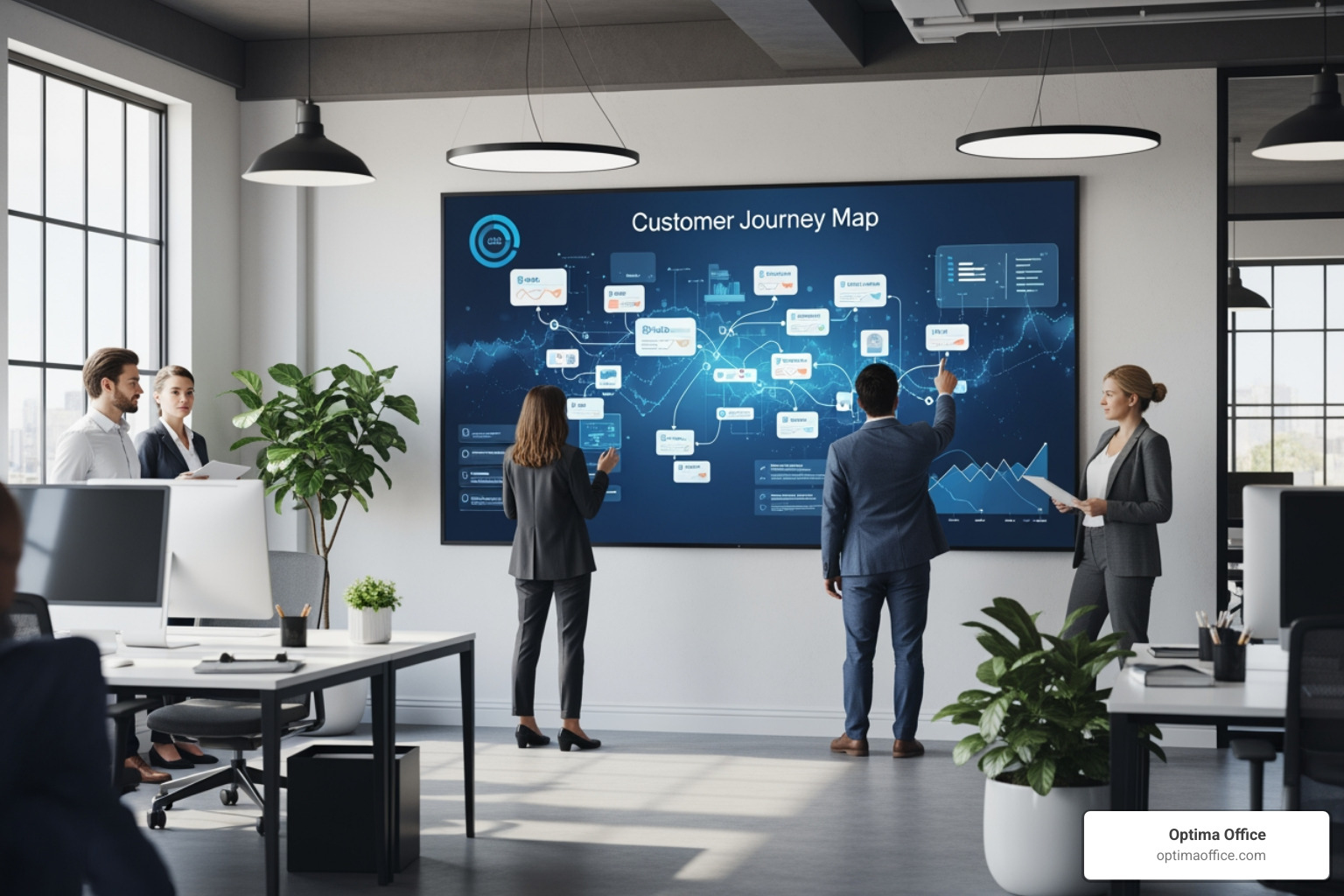
Market intelligence tools now allow us to contextualize our performance against the broader economy. By leveraging anonymized and aggregated transaction data, sometimes involving over 175 billion transactions, businesses can see how they stack up against their peers. This benchmarking is vital for identifying whether a dip in sales is a company-specific issue or a wider macroeconomic trend.
| Industry | Primary Use of Business Insights | Expected Outcome |
|---|---|---|
| Retail | Demographics & Spending Patterns | Optimized ad spend & higher margins |
| Healthcare | Market Growth & Regulatory Trends | Better patient outcomes & compliance |
| Finance | Transaction Volume & Risk Scoring | Portfolio growth & fraud mitigation |
Industry-Specific Intelligence for Competitive Advantage
Different industries leverage business insights in unique ways. In the healthcare sector, for example, the global antibody drug conjugates market is projected to grow to $68 billion by 2034. Companies in this space use insights to navigate complex regulatory environments and identify emerging technologies. Similarly, the oxygen therapy equipment market is seeing steady growth, requiring businesses to use data to manage supply chains and geographic expansion.
Even niche markets, such as canine stem cell therapy, are using business insights to project growth and secure investment. Whether you are a luxury brand looking to enter the Indian market or a local service provider in Southern California, the ability to turn market signals into breakthrough ideas is what creates a true competitive advantage.
For companies in specialized industries, financial insight is stronger when reporting matches the business model. Healthcare organizations, for example, may benefit from healthcare accounting support that aligns reporting with compliance, operational performance, and growth planning.
Overcoming Implementation Challenges and Ensuring Data Quality
While the benefits of business insights are clear, the path to implementing them isn’t always smooth. Many organizations struggle with data silos, where information is trapped in different departments, and a lack of integration between their financial and HR systems. Without a centralized view, it is nearly impossible to generate meaningful insights.
Collecting and Integrating Data from Multiple Sources
The first step to overcoming these challenges is establishing a robust data integration strategy. This involves using native connectors and APIs to pull data from your ERP, CRM, and HRIS systems into a single, centralized dashboard. By merging these datasets, we can create a “single source of truth” that everyone in the organization can trust.
Once the data is centralized, query-building tools allow non-technical users to filter and join data without needing to write complex code. This democratization of data ensures that managers at every level can access the business insights they need to run their departments efficiently. Reusable reports that update automatically save hours of manual labor and reduce the risk of human error.
Best Practices for Security and Compliance
As we collect more data, security and compliance become paramount. Organizations must ensure they have strict access controls and audit trails in place to protect sensitive financial and employee information. This is especially true for businesses in California, where data privacy laws are stringent.
Maintaining data quality is equally important. If the raw data is inaccurate, the resulting business insights will be flawed. We recommend regular data governance audits to ensure that all information being fed into your analytics tools is clean and verified. This level of quality control is what allows stakeholders to align on a strategy and move forward with confidence.
Emerging Trends Shaping the Future of Intelligence
The future of business insights is moving toward real-time, people-centric analytics. We are seeing a shift away from static, monthly reports toward live data streams that provide a pulse on the organization at any given moment. This allows for workforce planning that is based on actual business needs and predicted employee patterns.
The Rise of People Analytics in Business Strategy
One of the most powerful applications of business insights today is in the realm of people analytics. By combining HR data with project management data, we can identify things like burnout risk and high-performer distribution. For example, a project that is falling behind might not need more headcount; it might simply need a different mix of expertise or a leader who isn’t currently at risk of exiting.
Merging sales data with turnover data is another game-changer. It allows us to calculate the true revenue loss and recruitment costs associated with losing a top performer. This helps HR heads and CEOs build a data-backed case for better retention strategies or total rewards optimization. When we understand the “who” behind the “what,” we can make much smarter organizational decisions.
If your people data is disconnected from your leadership decisions, Optima Office’s HR services can help support stronger people systems, reporting, and workforce planning.
Measuring the ROI of Intelligence Initiatives
To justify the investment in business insights, organizations must be able to measure the ROI of their initiatives. This can be seen in incremental sales increases, but also in more subtle ways, such as reallocating 25% of a data scientist’s time to higher-value projects because they no longer have to hunt for data.
Improved decision accuracy is perhaps the most significant, yet hardest to quantify, benefit. When a leadership team can act on verified data rather than “gut feeling,” the long-term value to the enterprise is immense. Whether it’s through optimized marketing spend or more efficient service delivery, the impact of these insights is felt across the entire bottom line.
Empower Your Organization with Better Business Insights
As we navigate the complexities of 2026, the integration of financial and human capital data has become the hallmark of successful leadership. Business insights are no longer a luxury reserved for the world’s largest corporations; they are a necessity for any small or mid-sized business looking to thrive in a competitive market. By turning raw data into a clear roadmap, you can move your company forward with certainty.
Optima Office provides the specialized fractional CFO, controller, and HR advisory services necessary to turn these complex datasets into a clear roadmap for growth. By leveraging a proprietary five-point system and rapid team deployment, they ensure that small and mid-sized companies have the expert leadership required to maximize profits and minimize risk without the cost of full-time executive hires.
Our mission is to provide these exceptional outsourced accounting and HR services while building positive relationships within our local Southern California communities. If your organization needs executive-level financial leadership behind its business insights, explore Optima Office’s fractional CFO services to see how strategic financial guidance can support stronger decisions and growth.