

What is account management services is a question that comes up often for growing businesses trying to figure out how to retain clients, expand revenue, and build lasting relationships without dropping the ball on day-to-day execution.
Account management services refer to the structured process of managing, nurturing, and growing relationships with existing clients after an initial sale. Rather than focusing on winning new business, account management focuses on:
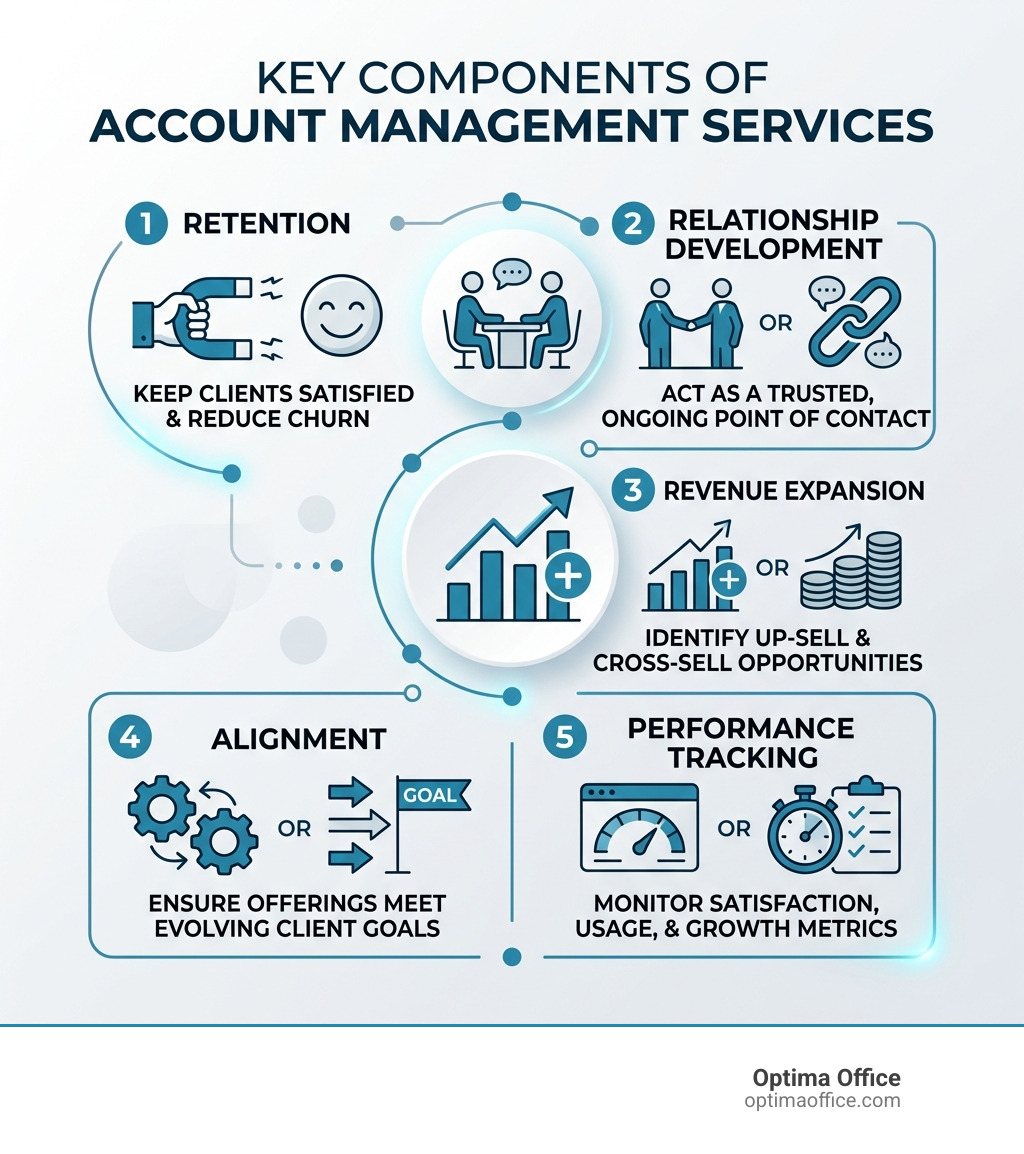
- Retention – keeping clients satisfied and reducing churn
- Relationship development – acting as a trusted, ongoing point of contact
- Revenue expansion – identifying upsell and cross-sell opportunities within existing accounts
- Strategic alignment – ensuring the company’s offerings continue to meet evolving client goals
- Performance tracking – monitoring satisfaction, usage, and growth metrics to stay ahead of problems
For small and mid-sized businesses, this is not a luxury — it is the foundation of sustainable growth.
Here is why that matters: acquiring a new customer costs anywhere from 5 to 25 times more than retaining an existing one. Yet many growing businesses invest the bulk of their resources in lead generation while underinvesting in the client relationships they have already worked hard to build. The result is revenue that leaks quietly — through churn, missed upsell opportunities, and clients who simply feel neglected.
Account management services close that gap. Whether delivered by an in-house team or through an outsourced partner, they turn post-sale relationships into long-term revenue engines. For businesses in professional services, healthcare, nonprofits, or manufacturing, where client relationships are often complex and high-stakes, this function is especially critical.
Key terms for what is account management services:
At its core, What Is Account Management? Roles, Strategies & Benefits defines this function as the strategic art of turning business relationships into lifelong partnerships. While sales teams are the hunters who bring in new logos, account managers are the farmers who nurture the soil, ensure the crop thrives, and plan for future harvests.
In the modern business landscape, especially within Southern California’s competitive markets, this role has evolved. It is no longer just about answering emails or “checking in.” It involves a deep dive into a client’s business health, acting as a bridge between the customer’s needs and the company’s solutions. When we look at a digital dashboard for a client, we aren’t just looking at numbers; we are looking at the story of a partnership.
Distinguishing Account Management from Account Services
It is easy to use these terms interchangeably, but they represent different philosophies. Account services are often project-based and tactical. Think of a vendor-client relationship where the goal is to complete a specific task—like filing a tax return or setting up a software module—and move on. It is transactional and focuses on the “what.”
In contrast, account management is focused on long-term goals and the “why.” We believe that outsourced accounting services should transcend basic task completion. True account management involves understanding a client’s five-year plan and ensuring that every financial report or HR policy implemented today supports that future vision. It shifts the dynamic from being a “vendor” to being a “partner.”
Defining what is account management services for small businesses
For a small business (SMB), the definition of what is account management services is closely tied to scalability. Most SMB owners wear too many hats; they are the CEO, the lead salesperson, and often the primary account manager. As a business grows, this becomes a bottleneck.
Dedicated account oversight allows an SMB to allocate resources effectively. Instead of the owner spending hours troubleshooting a client’s minor issue, a professional account manager handles the relationship. This ensures that as the client base grows, the quality of service doesn’t diminish. It protects the Customer Lifetime Value (CLV) by ensuring that the “honeymoon phase” of a new sale transitions into a stable, profitable, and long-lasting marriage.
The Strategic Impact of Dedicated Account Oversight
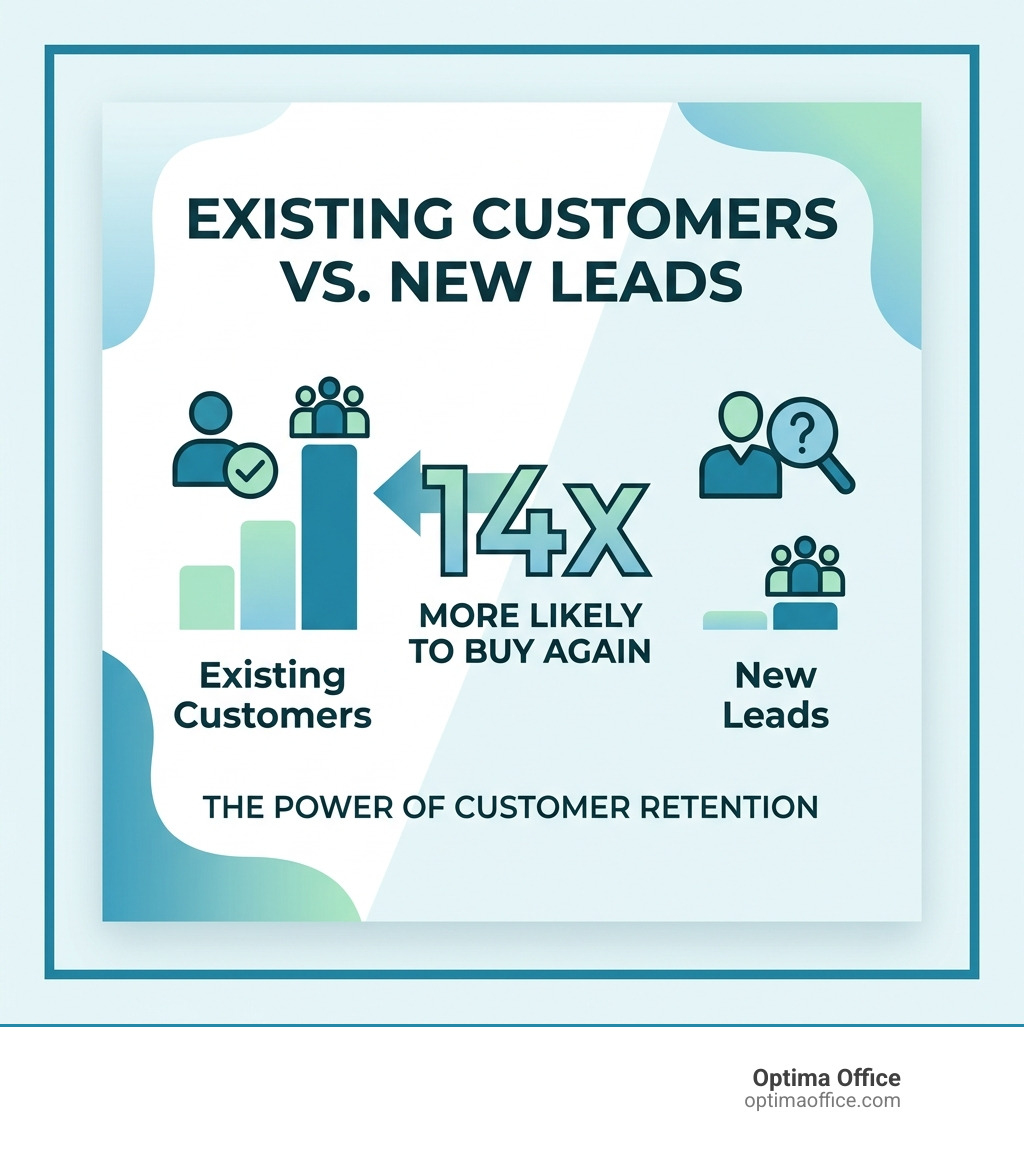
The financial implications of effective account management are staggering. Research shows that existing satisfied customers are 14 times more likely to make a repeat purchase compared to a cold lead. This is why What Is Account Management? | Salesforce IN emphasizes that retention is the primary driver of profitability.
By focusing on the clients we already have, we can achieve revenue expansion without the high cost of acquisition (CAC). When a business utilizes fractional accounting, they gain the oversight necessary to spot these opportunities. An account manager might notice that a client’s growing payroll needs require a more robust HR strategy, leading to a natural upsell that benefits both parties.
The Pareto Principle in Client Management
The 80/20 rule—or Pareto Principle—is alive and well in account management. In most businesses, 80% of revenue comes from the top 20% of clients. These are your “key accounts.” Strategic account management involves identifying these high-value relationships based on a revenue-to-cost ratio.
We don’t just look at who spends the most; we look at who is the most strategic fit for long-term growth. By prioritizing these accounts, businesses can ensure that their most valuable assets receive the proactive attention they deserve, rather than being drowned out by the “noisy” but lower-value accounts.
Why what is account management services drives repeat business
Engagement is the secret sauce of retention. Engaged customers contribute roughly 23% higher lifetime revenue through increased “share of wallet” and brand advocacy. When a client feels that their account manager is looking out for their best interests—identifying risks before they become problems—they become a champion for your brand. This advocacy leads to referrals, which are the highest-converting and lowest-cost leads a business can generate.
Core Responsibilities and Essential Skills
Effective account management requires a unique blend of “hard” and “soft” skills. According to What is Account Management? | Richardson Sales Performance, an account manager must possess vertical fluency—a deep understanding of the client’s specific industry—along side the ability to navigate complex stakeholder maps.
Essential responsibilities include:
- Conflict Resolution: Addressing issues with transparency and honesty before they escalate.
- Onboarding: Ensuring the transition from sales to service is seamless and the client feels “heard” from day one.
- Stakeholder Mapping: Identifying the decision-makers and influencers within a client’s organization to build multi-layered relationships.
The Trusted Advisor Model
The ultimate goal of an account manager is to be viewed as a “trusted advisor.” This means moving beyond being a person who provides a service to being a person who provides insights. For example, fractional controller services don’t just provide a balance sheet; they explain what the balance sheet means for the company’s ability to hire new staff in San Diego next quarter. This proactive problem-solving and strategic alignment are what differentiate a service provider from a true partner.
What is account management services in a professional context?
In a professional setting, the workflow is structured and predictable. It begins with a comprehensive needs assessment and moves into regular touchpoints. One of the most critical elements is the Quarterly Business Review (QBR). These aren’t just status updates; they are strategic sessions where we review goals, measure progress against KPIs, and adjust the roadmap for the coming months. This level of client advocacy ensures that the client’s voice is always present in our internal decision-making.
Leveraging Technology and Data for Success
In the past, account management lived in Rolodexes and spreadsheets. Today, it is powered by Relationship Intelligence. The Ultimate Guide to Effective Account Management highlights how CRM (Customer Relationship Management) tools allow us to centralize every interaction, from an email about a billing question to a high-level strategy call.
Understanding the bookkeeper-controller difference is vital here; while a bookkeeper records the data, the account management function (often led by a controller or CFO) uses that data to predict client needs. AI and predictive analytics can now alert us if a client’s engagement is dropping, allowing us to intervene before they even consider churning.
Automating the Personal Touch
It sounds like a paradox, but automation can actually make relationships feel more personal. By automating the “cadence” of communication—reminders for check-ins, automated follow-ups on open tickets, and personalized reports—we free up the account manager to focus on high-value conversations. Data centralization ensures that if a client calls, anyone on our team can see their history and provide immediate, informed help.
Overcoming Common Challenges in Client Relations
Account management isn’t without its hurdles. Common challenges include:
- Competing Demands: Balancing the needs of multiple high-value accounts.
- Knowledge Preservation: Ensuring that if an account manager leaves, the deep institutional knowledge of the client’s business isn’t lost.
- Scalability: Maintaining a “boutique” feel while the company grows.
We address these through standardized account planning templates and collaborative CRM usage, ensuring that the relationship belongs to the firm, not just one individual.
Measuring Performance and Growth
How do we know if what is account management services is actually working? We measure it through a mix of financial and satisfaction-based metrics. While sales performance is often a “yes/no” based on a closed deal, account management performance is measured over time.
| Metric | Sales (Account Executive) | Account Management |
|---|---|---|
| Primary Goal | New Customer Acquisition | Retention & Expansion |
| Time Horizon | Short-term (Deal cycle) | Long-term (Life of client) |
| Success Metric | New Revenue / Win Rate | NRR / Churn Rate / NPS |
| Relationship | Transactional | Consultative |
Key Performance Indicators for Retention
To gauge the health of our client base, we look at several specific KPIs:
- Customer Lifetime Value (CLV): The total revenue we expect from a single client over the duration of the relationship.
- Net Retention Revenue (NRR): This measures the revenue from existing clients, including upsells, minus any churn. An NRR over 100% means you are growing even without adding new customers.
- Average Order Value (AOV): Tracking if clients are utilizing more of our outsourced CFO services over time.
Key metrics for what is account management services
Beyond the hard numbers, we use “pulse” metrics. The Net Promoter Score (NPS) and Customer Satisfaction (CSAT) surveys provide direct feedback on how clients feel about the partnership. High referral volumes are perhaps the most telling metric; if our clients are willing to put their reputation on the line to recommend us to other Southern California businesses, we know our account management is succeeding.
Frequently Asked Questions about Account Management
What is the difference between an account manager and an account executive?
An account executive (AE) is typically responsible for finding and closing new business. Once the contract is signed, they hand the relationship over to the account manager (AM). The AM is then responsible for the long-term health, satisfaction, and growth of that account.
How does account management differ from customer success?
While they overlap, customer success is often more focused on the technical adoption of a product (making sure the client knows how to use the software). Account management is broader, focusing on the commercial relationship, contract renewals, and strategic business alignment.
Why is account management vital for business success?
It is the most cost-effective way to grow. By reducing churn and increasing the value of existing accounts, a business creates a stable foundation of recurring revenue. This stability allows for better long-term planning and higher company valuation.
Driving Enterprise Growth Through Integrated Financial Leadership
At Optima Office, we believe that account management is the heartbeat of a healthy business. We don’t just provide “staff”; we provide a cohesive department that integrates with your culture. Our proprietary five-point system ensures that the fractional CFOs, controllers, and HR professionals we deploy are not only experts in their fields but also the right personality fit for your team.
Whether you are a non-profit in San Diego needing better financial oversight or a growing tech firm in Southern California looking to scale your HR department, our mission is to build positive relationships that drive your success. By combining high-level strategic alignment with rapid team deployment, we help you maximize profits and minimize risk.
If you are ready to move beyond just tracking numbers and start building a strategic engine for growth, it is time to partner with an outsourced accounting team that understands the true value of account management. Let us help you turn your business relationships into your greatest competitive advantage.