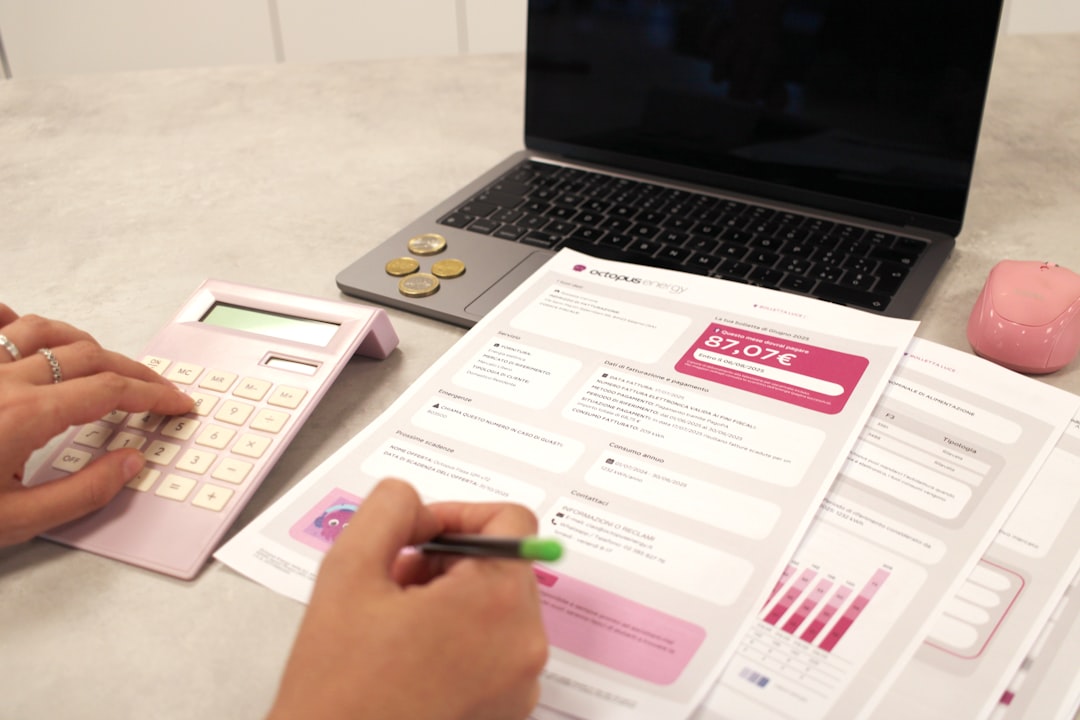
Bookkeeping for consultants is more complex than basic income and expense tracking because consultants often manage irregular revenue, project-based fees, retainers, reimbursable expenses, and billable hours across multiple clients. Without a clean system, tax season becomes stressful fast. Missed deductions, unclear project margins, late invoices, and inconsistent reconciliations can all hurt profitability. If your consulting business needs cleaner financial records, Optima Office’s bookkeeping services can help you build a more reliable system before tax season creates a fire drill.
Why Bookkeeping for Consultants Is More Complex Than Most Businesses Realize
Bookkeeping for consultants is fundamentally different from bookkeeping for a typical retail or service business. Your revenue does not always arrive on a predictable schedule, and your expenses are often tied to specific clients, projects, or engagements.
One month might include several completed projects and paid retainers. The next month might be slower because client approvals, milestone payments, or contracts are delayed. That creates a cash flow cycle that can be difficult to manage without accurate books.
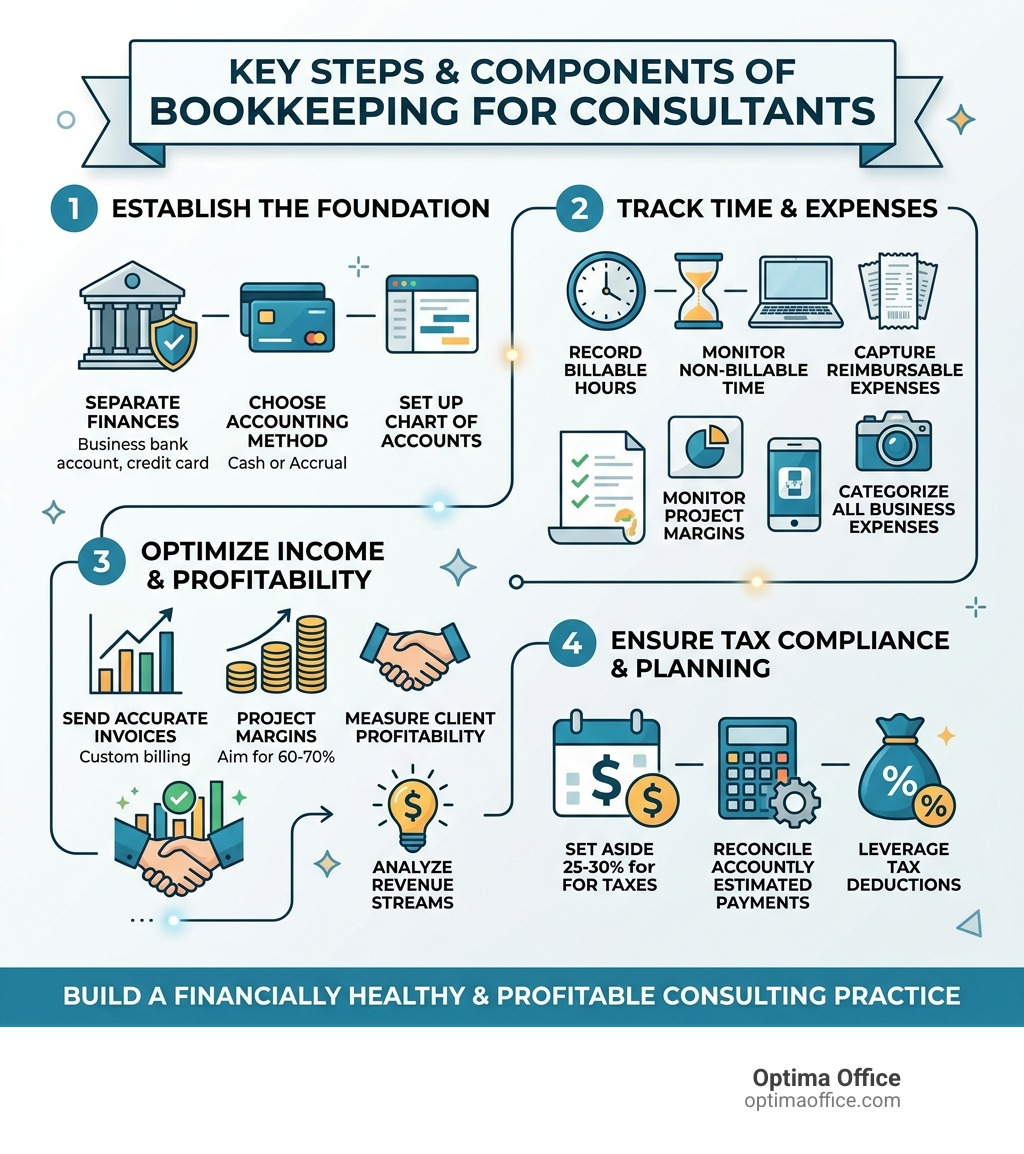
The core elements of effective consultant bookkeeping include:
- Separate business and personal finances: Use a dedicated business bank account and credit card.
- Choose the right accounting method: Cash accounting may work for solo consultants, while accrual accounting may be better as the business grows.
- Track billable and non-billable hours: Untracked time directly reduces profitability.
- Monitor project delivery margins: Every project should be reviewed for revenue, costs, and time investment.
- Plan for taxes throughout the year: Tax obligations should not be a surprise in April.
- Reconcile accounts regularly: Weekly or monthly reconciliation helps prevent errors.
- Use cloud-based accounting software: Software can reduce manual work and improve reporting accuracy.
Most business owners expect bookkeeping to be simple. For consultants, it rarely is. You may be billing different clients at different rates, tracking work across multiple engagements, and managing expenses that may or may not be reimbursable.
That is why bookkeeping needs to be part of your operating system, not something you only think about during tax season.
Why Bookkeeping for Consultants is Uniquely Challenging
In consulting, your inventory is your time, expertise, and ability to deliver results. That makes bookkeeping more nuanced than simply recording sales and expenses.
Project-based revenue is one of the biggest challenges. You may work for weeks or months before receiving a major payment. Without proper reporting, your books may show one month as weak and the next as unusually strong, even though the business is operating consistently.
Billable and non-billable time also need to be tracked carefully. If you spend hours researching, preparing deliverables, managing client communication, or revising work, that time affects your profitability whether or not it appears on an invoice.
Reimbursable expenses can create another problem. Travel, software, subcontractor support, research tools, and client-specific costs should be assigned to the right project. If those costs are missed, your margins shrink without you realizing it.
For consulting firms and other advisory businesses, professional services accounting can help connect bookkeeping, profitability tracking, and financial reporting to the way the business actually operates.

Managing the Feast or Famine Cycle
The feast-or-famine cycle is one of the biggest financial challenges consultants face. One month may be overloaded with client work, while the next may require heavy business development just to keep the pipeline moving.
Good bookkeeping helps smooth out that volatility. When your records are current, you can see upcoming receivables, expected expenses, cash reserves, and tax obligations before they become problems.
A strong consultant bookkeeping system should include a cash flow forecast that looks at least three to six months ahead. This helps you prepare for slower months, plan owner draws, and decide when to invest in marketing, subcontractors, or new tools.
Retainers can also create more predictable revenue. However, retainers need to be recorded properly. If payment is received before the work is performed, that revenue may need to be treated differently from income that has already been earned.
Essential Habits for Streamlined Bookkeeping for Consultants
Good bookkeeping is not a once-a-year project. It is a set of small, consistent habits that keep your financial records accurate.
The first rule is separation. Never mix personal and business finances. A dedicated business bank account and business credit card make reconciliation cleaner, reduce confusion, and protect the business in the event of a review or audit.
The second rule is consistency. Set a weekly or monthly rhythm for reviewing income, expenses, invoices, receipts, and bank activity. Waiting until tax season creates more work and increases the chance of missed deductions or inaccurate records.
The third rule is documentation. Every transaction should have a clear purpose, category, and supporting record. Clean documentation gives you better reports and makes tax preparation much easier.
Automating Bookkeeping for Consultants with AI Tools
Manual bookkeeping creates unnecessary friction, especially for consultants who already spend most of their time serving clients. Modern tools can help automate recurring tasks, reduce data entry, and make financial information easier to access.
Cloud-based accounting software can connect to bank feeds, categorize recurring expenses, organize receipts, and support invoice tracking. Time-tracking tools can also integrate with invoicing systems so billable work is captured more accurately.
Artificial intelligence can help identify patterns, suggest categories, and reduce repetitive work. Still, automation needs oversight. If the rules are wrong, the reports will be wrong too.
Technology should support financial discipline. It should not replace review, reconciliation, or professional judgment.
Setting Up a Scalable Bookkeeping for Consultants Framework
As your consulting practice grows, your bookkeeping system needs to grow with it. A simple spreadsheet may work at the very beginning, but it usually breaks down once you add retainers, subcontractors, payroll, multiple clients, or larger projects.
A scalable bookkeeping framework starts with a clean chart of accounts. The goal is to have enough detail to understand your business without creating so many categories that reports become messy.
You should also use a double-entry bookkeeping system. Double-entry bookkeeping records every transaction in a way that keeps the balance sheet in alignment, making your records more reliable and easier to review.
If your consulting practice is growing beyond basic bookkeeping, Optima Office’s outsourced accounting services can provide broader financial support across bookkeeping, reporting, and accounting processes.
Choosing the Right Accounting Method and Software
One of the first major decisions consultants face is choosing between cash and accrual accounting. This choice affects how income, expenses, taxes, and profitability show up in your reports.
| Feature | Cash Accounting | Accrual Accounting |
|---|---|---|
| When is Income Recorded? | When the cash hits your bank account. | When the invoice is sent (earned). |
| When are Expenses Recorded? | When you actually pay the bill. | When you receive the bill (incurred). |
| Best For… | Solo consultants and very small firms. | Growing firms with complex projects. |
| Pros | Simple; reflects actual cash on hand. | Better for long-term strategic planning. |
| Cons | Can hide upcoming tax/bill obligations. | More complex to manage day-to-day. |
For many solo consultants, cash accounting is the simplest starting point because it aligns closely with the bank balance. As the business grows, accrual accounting may provide a more accurate view of revenue, expenses, and long-term profitability.
Software matters too. QuickBooks Online and Xero are commonly used options because they support cloud access, invoicing, bank feeds, reporting, and integrations with other business tools.
The right software setup should match the way your consulting business works. That means your chart of accounts, project tracking, invoicing process, and reporting dashboards should all support better decision-making.
The Benefits of Double-Entry Bookkeeping
Double-entry bookkeeping is the foundation of reliable financial records. Every transaction affects at least two accounts, which helps keep your financial statements balanced.
For consultants, this matters because it improves accuracy and creates a stronger audit trail. If your records are ever reviewed by a tax professional, lender, investor, or internal advisor, double-entry bookkeeping shows that your financial system is structured properly.
It also supports better financial reporting. A complete system gives you more than a profit and loss statement. It gives you a balance sheet, cash flow visibility, and a stronger view of the business.
Tracking Project Profitability and Billable Hours
Many consultants know their total revenue but do not know which clients or projects are actually profitable. That is a serious blind spot.
A large client may look valuable because they bring in significant revenue, but if they require constant revisions, heavy meetings, extra research, and unpaid support, the margin may be weaker than expected. Smaller clients may actually be more profitable if the work is focused and efficient.
Project profitability tracking helps answer important questions:
- Which clients produce the strongest margins?
- Which services take too much time for the fee charged?
- Where is scope creep hurting profitability?
- Which projects should be priced differently?
- When should the business hire support or subcontract work?
This is where bookkeeping becomes strategic. It helps you price better, protect your time, and grow intentionally.
Maximizing Billable Efficiency
Billable efficiency measures how much of your working time turns into revenue. For consultants, this is one of the most important profitability metrics.
Time tracking should be simple and consistent. Tools like Harvest, Toggl, QuickBooks Time, or similar systems can help consultants record time by client, project, and task.
When time tracking connects to invoicing, fewer billable hours slip through the cracks. That means fewer missed charges, cleaner invoices, and stronger revenue capture.
Review these metrics monthly. If too much time is going toward non-billable tasks, administrative work, or underpriced client projects, the business may need to adjust pricing, scope, staffing, or service delivery.
Tax Planning and Deductions for Modern Consultants
Tax season should not feel like a surprise. If bookkeeping is handled consistently throughout the year, tax preparation becomes a reporting process instead of a cleanup crisis.
Consultants should track deductible expenses carefully. These may include mileage, software subscriptions, professional insurance, home office expenses, internet and phone usage, subcontractor payments, education, business travel, and professional services.
The key is documentation. A deduction is only useful if you can support it with clean records.
Consultants should also set aside money for taxes throughout the year. Because many consultants are self-employed or operate pass-through entities, tax obligations may not be automatically withheld the way they are for employees.
A separate tax reserve account can help prevent cash flow stress when quarterly estimated payments or annual tax bills are due.
Common Deductions and Compliance
Consultants often operate as sole proprietors or S-Corps, which means you are responsible for self-employment tax (the employer and employee portions of Social Security and Medicare).
If you hire other consultants to help with a project, you must manage 1099 compliance. This means collecting a W-9 form before you ever send them a payment. If you wait until January to ask for their tax info, you’ll find it’s much harder to get a response. Consulting firms with subcontractors should maintain rigorous 1099 tracking to avoid IRS penalties.

Frequently Asked Questions about Consultant Bookkeeping
Should consultants use cash or accrual accounting?
Many solo consultants start with cash accounting because it is simple and shows income when money is received. It works well for smaller practices with straightforward transactions.
As a consulting firm grows, accrual accounting may provide a better picture of long-term financial performance. This is especially true when the firm manages larger projects, retainers, subcontractors, milestone billing, or delayed payments.
How can I effectively manage irregular cash flow?
The best approach is to combine forecasting, cash reserves, and disciplined invoicing. Consultants should build a three-to-six-month cash cushion when possible and use retainers or recurring revenue to create a more stable baseline.
Accounts receivable tracking is also critical. Send invoices promptly, follow up consistently, and make payment easy for clients.
If cash flow is still hard to predict, your business may need stronger reporting or forecasting support. Optima Office’s fractional CFO services can help growing consulting firms plan ahead instead of reacting month to month.
When should a consultant outsource their bookkeeping?
You should consider outsourcing bookkeeping when financial tasks are taking time away from billable work, tax season feels chaotic, reports are unreliable, or you no longer know which clients and projects are profitable.
Outsourcing can also make sense when your business adds subcontractors, payroll, retainers, or larger projects. At that point, bookkeeping mistakes can become more expensive.
A professional bookkeeping partner can help keep records clean, reconcile accounts, organize expenses, support tax preparation, and give you more confidence in your numbers.
Achieving Long-Term Financial Clarity
Bookkeeping for consultants is not just about staying out of trouble at tax time. It is about building the financial clarity needed to lead your business with confidence.
When your books are clean, you know how much you can afford to invest in marketing, when you can bring in support, which clients are worth prioritizing, and how much revenue you need to hit your income goals.
At Optima Office, we help Southern California consultants move from financial chaos to clear, reliable reporting. Our team supports bookkeeping, outsourced accounting, controller services, and fractional CFO guidance so your financial function can grow with your business.
If your consulting business needs better oversight as it scales, financial controller services can help strengthen reporting, internal controls, and monthly financial review.
You started your consulting business because you are an expert in your field, not because you wanted to chase receipts and reconcile transactions. Let the numbers become a tool for better decisions instead of a source of stress.
Ready to stop dreading tax season and build cleaner financial systems? Explore Optima Office’s bookkeeping services to see how professional bookkeeping support can help your consulting business protect cash flow, capture deductions, and grow with confidence.