The success rate for a competitive industry such as construction is less than 40%. Construction companies do not have a lot of room for error. Job profitability, unapplied contract related costs, general and administrative expenses, financing-related expenses and investment income are just a few of the responsibilities your company oversees financially.
Optima’s expert staff will make sure your business needs don’t slip through the cracks. Our highly trained staff specializes in your industry’s demands with our outsourced accounting, finance, and HR staff as well as fractional controllers and CFOs. We cultivate and manage construction-related businesses such as contractors, subcontractors, developers, vendors, and other construction-related trades so we know about the challenges construction companies face. Save time and money, and let our professionals take care of your finances.
In comparison to other industries, such as retail or manufacturing, accounting for construction contractors have several distinct needs. Whether it’s billing, production or labor issues, contractors operate their businesses primarily on a project basis with decentralized production and long-term contracts.

Construction companies have one way to control costs and bid intelligently. That method is to track accurate costs for each project, as well as the types of expenses and production activities that make up job costs. Our expert personnel understands the different strategies needed to run your type of business and they have experience in your industry. Optima has handpicked the most qualified and experienced accounting leaders in the construction industry – let us take it from here.
Business strategies and human resource management are intertwined which makes your outsourced HR team an invaluable part of your company. Don’t let your organization’s lack of resources keep you from hiring the best employees or following the proper employment guidelines or laws. Optima’s experienced HR team can help you mitigate these risks and set you up for success.
A CFO will go above and beyond a controller’s duties. When you need to improve your bottom line and save yourself time, let Optima’s fractional CFOs assist you.

In construction, if you don’t know your job margins while the job is still running, you’re already late. Our approach is built around making job-level profitability visible in real time, not after the project is closed. That means clean job setup, disciplined cost coding, and progress billing that ties directly to actual completion – not guesses or lagging percentages.
From a CFO standpoint, job costing isn’t an accounting exercise; it’s a risk-management tool. We focus on catching margin erosion early; change orders not billed, labor overruns, subcontractor creep, so leadership can intervene before losses are locked in.
What goes wrong without this:
Construction jobs look profitable until they’re not. Costs get coded inconsistently, change orders don’t get billed timely, and progress billing drifts from actual completion. By the time the job closes, the margin is already gone and there’s nothing left to fix, just an explanation to the bank or the owner about why the job underperformed.
Yes, and this is one of the highest value areas of CFO involvement in construction. Construction cash flow is inherently volatile: payroll runs weekly, subcontractors want to be paid, retainage ties up cash, and billing doesn’t always line up with costs. A CFO-level forecast looks forward, job by job, and shows when cash moves, not just when revenue is recognized.
That allows owners to plan payroll, manage draws, time subcontractor payments, and avoid last-minute cash scrambles. The goal is fewer fire drills and more controlled decision making especially as the backlog grows.
What goes wrong without this:
Payroll surprises become routine, subcontractors get paid late, and retainage creates hidden cash gaps. Owners find out there’s a problem when the bank balance is already low. Instead of planning, leadership spends time reacting — juggling payments, calling lenders, and trying to buy time rather than running the business strategically.
We scale support to match the reality of construction businesses – uneven cash flow, fluctuating backlog, and changing job mix. That typically starts with solid bookkeeping and reconciliations, then layers in controller-level oversight, job reporting, WIP schedules, and cash visibility. As complexity increases, CFO support steps in helping with pricing, backlog planning, bonding conversations, and lender reporting.
The structure flexes as your workload flexes. You’re not paying for a full internal department. Instead, you’re getting the level of financial leadership the business actually needs at each stage.
What goes wrong without this:
Owners end up wearing too many hats, accounting falls behind during busy periods, and reporting quality drops just when the business needs clarity most. Cash decisions get made off gut feel instead of facts, and growth creates more risk than reward. Eventually, the company hits a ceiling — not because there isn’t work, but because the financial infrastructure can’t support it.
We support onboarding, policy alignment, documentation, and compliance workflows that matter when your workforce changes frequently. We also help reduce HR risk around classification, training, and recordkeeping.
We establish clear, repeatable workflows so materials, labor, and subcontractor costs are coded the same way every time – by job, by cost code, and by cost type. That sounds basic, but it’s where most construction accounting breaks down – consistency is everything.
When costs are coded correctly at the front end, job cost reports become reliable, billing becomes cleaner, and disputes drop. From a CFO perspective, this is about eliminating surprises and creating numbers you can stand behind with a lender, bonding agent, or partner.
What goes wrong without this:
Material costs get buried in the wrong jobs, labor isn’t coded consistently, and subcontractor invoices hit after the billing cycle has passed. Job cost reports stop being trusted, billing disputes increase, and owners are left guessing which jobs actually make money. The numbers technically “balance,” but they don’t tell the truth.
We build a targeted pipeline based on role requirements and market realities, then screen for fit so you’re not burning hours interviewing the wrong people.
Yes. Construction environments have different exposure points than office settings, and we tailor procedures and training to match on-site realities and reporting paths.
From a CFO perspective, bonding and lending are about credibility and predictability, not just numbers. A CFO ensures financial statements, WIP schedules, and backlog reporting are clean, consistent, and defensible so underwriters can trust what they’re seeing.
That includes explaining margin trends, cash flow timing, and risk exposure in a way that builds confidence. When those relationships are managed proactively, bonding capacity grows alongside the business instead of becoming a constraint.
When the owner is making decisions based on instinct because the numbers lag reality.
Once backlog grows, jobs overlap, or financing becomes more complex, CFO support becomes necessary to manage risk—pricing work, timing cash, and deciding which jobs to pursue. That’s not accounting work; that’s executive financial judgment.
Serving our customers means you need to have the right experts on your team. Optima Office has the construction accounting and HR experts you need to grow your business – let us take it from here.
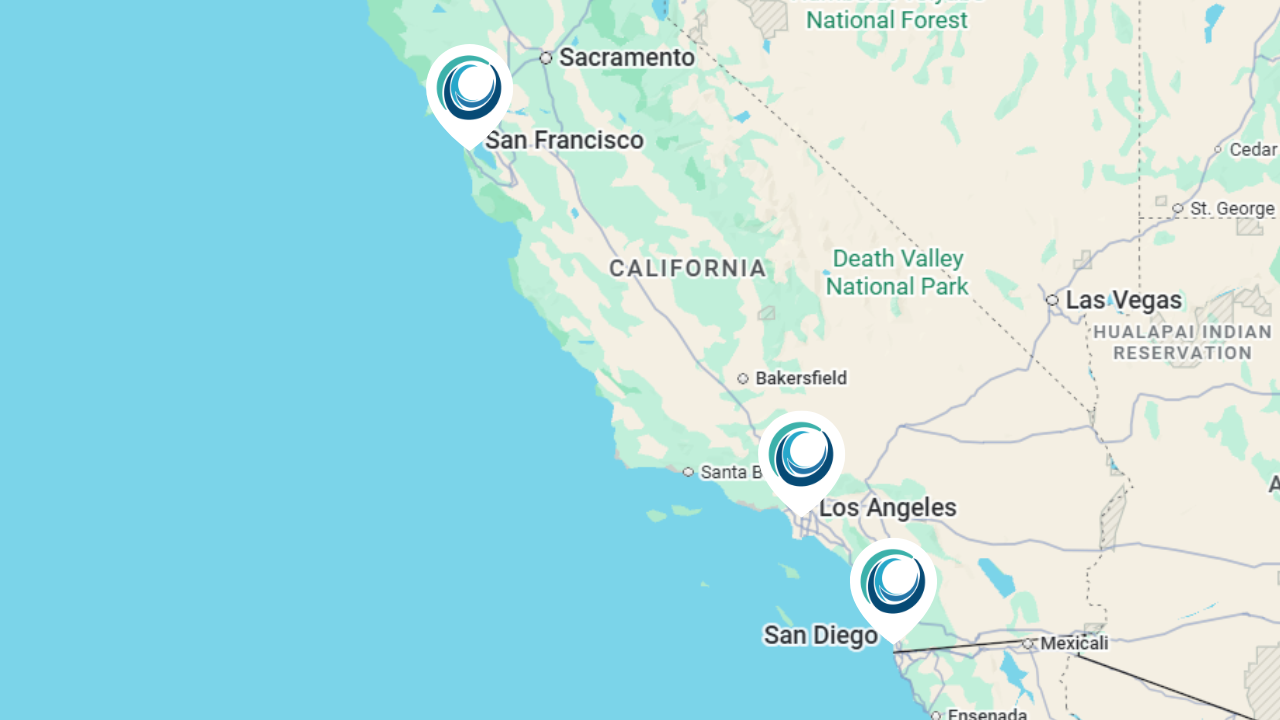
With locations in San Diego, Orange County, and San Francisco, Optima offers fractional CFO, HR, and professional accounting services throughout all of California and beyond.