

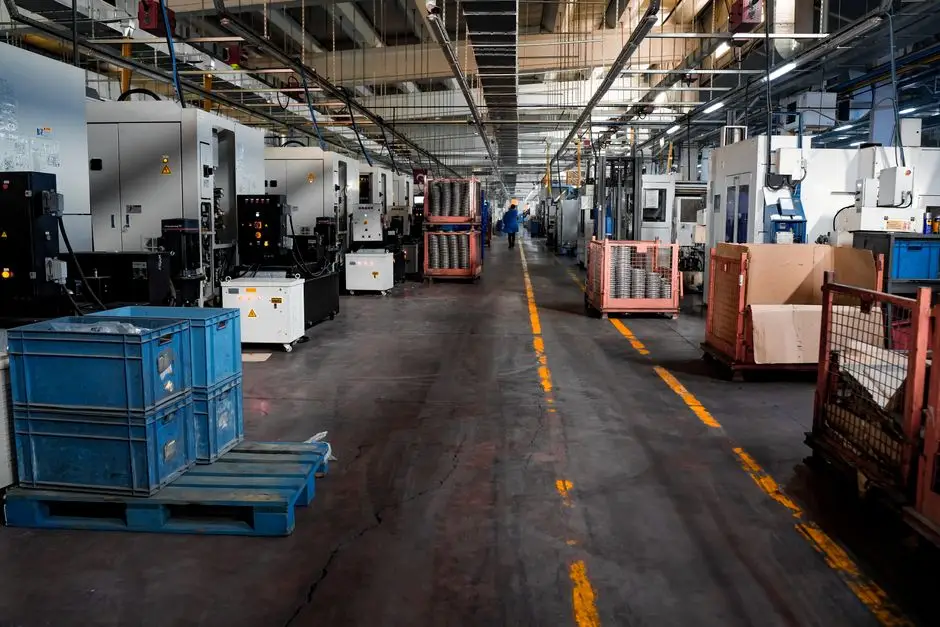
Accounting for manufacturing is a specialized financial discipline that tracks every cost involved in turning raw materials into finished goods, from direct labor and raw inputs to factory overhead and work in process inventory. Unlike general accounting, it requires a deep understanding of production cycles, cost classification, and inventory valuation across multiple stages. By mastering these fundamentals, business owners and CEOs can make informed pricing decisions and optimize production plans for long term growth.
Here’s a quick overview of what manufacturing accounting covers:
| Area | What It Involves |
|---|---|
| Cost Classification | Direct materials, direct labor, and manufacturing overhead |
| Inventory Stages | Raw materials, work-in-process (WIP), and finished goods |
| Key Calculations | Total Manufacturing Cost (TMC), COGM, and COGS |
| Costing Methods | Job order, process, activity-based, and standard costing |
| Inventory Valuation | FIFO, LIFO, weighted average, and specific identification |
| Compliance | GAAP, ASC 606 revenue recognition, and IRS UNICAP rules |
With over 6.5 million manufacturing enterprises operating worldwide and U.S. manufacturers expected to produce goods worth tens of trillions of dollars, the financial stakes could not be higher. Yet many small and mid-sized manufacturers still rely on general accounting practices that were never designed to handle production complexity, leaving them with distorted margins, inaccurate inventory values, and costly compliance gaps.
For manufacturers, accounting is not just recordkeeping. It is the engine behind every pricing decision, production plan, and profitability analysis. When it breaks down, whether from staff turnover, misclassified costs, or outdated systems, the damage compounds fast. This guide breaks down everything you need to know to get it right, from foundational concepts to advanced costing strategies and the technology that brings it all together.
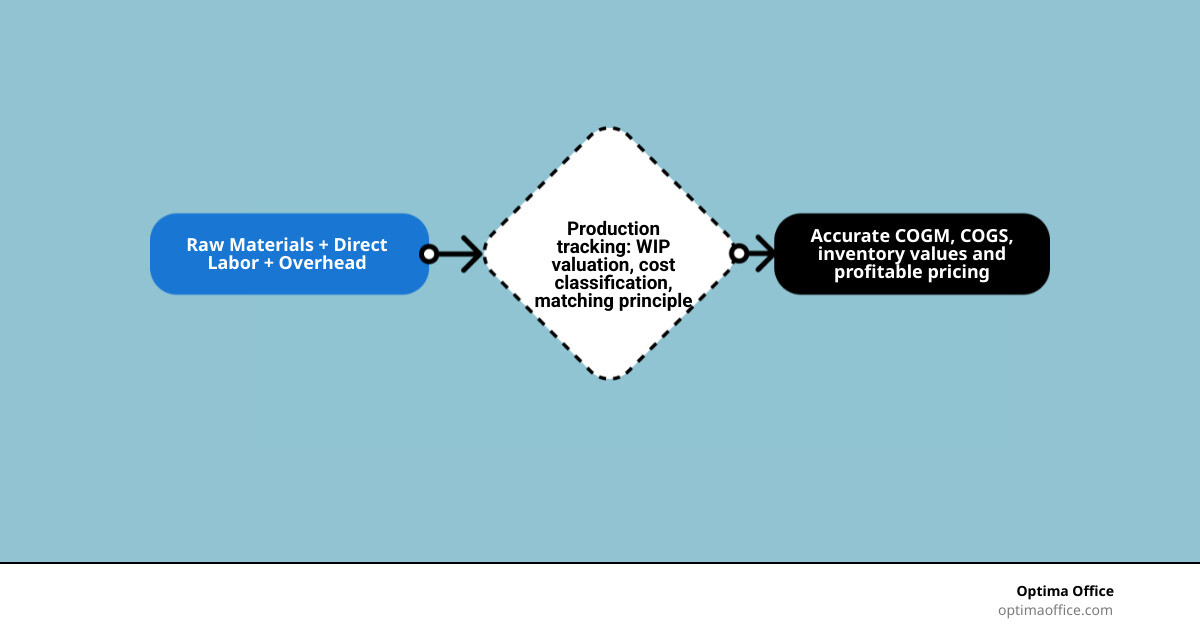
At its core, accounting for manufacturing is about visibility. We need to know exactly how much it costs to produce a single unit so we can price it correctly and ensure the business remains profitable. This starts with proper cost classification, where we separate costs into direct and indirect categories. By doing this, we can apply the matching principle, ensuring that the expenses incurred to create a product are recognized in the same period as the revenue generated from its sale.
One of the most critical elements we track is Work-in-Process (WIP) accounting. This represents products that are currently on the factory floor, no longer just raw materials, but not yet finished goods. If we don’t account for WIP accurately, our balance sheet will be misleading, and our profit margins will fluctuate wildly. Managing this cycle requires a constant flow of data from the production line to the back office to ensure every bolt, hour of labor, and kilowatt of electricity is captured.

Key Differences Between Manufacturing and General Accounting
Traditional retail or service accounting is relatively straightforward: you buy an item and sell it, or you sell your time. Manufacturing is far more complex because we are creators. We manage three distinct inventory stages: raw materials, work-in-process, and finished goods. Each stage requires different valuation techniques and impacts the financial statements differently.
Furthermore, we must deal with factory overhead, which includes costs like rent for the facility, equipment depreciation, and factory supervision. Unlike general administrative expenses, these must be allocated to the products themselves. We also focus heavily on production efficiency and regulatory compliance, such as IRS UNICAP rules, which require certain indirect costs to be capitalized into inventory rather than expensed immediately.
The Three Pillars of Manufacturing Costs
To master your production finances, you must understand the three pillars that make up your Total Manufacturing Cost (TMC). First is direct materials, which are the raw inputs that become a physical part of the finished product. Second is direct labor, encompassing the wages and benefits of the employees who actually build the goods.
The third pillar, manufacturing overhead, is often the most challenging to manage. This includes indirect expenses like factory utilities, maintenance, and the salaries of quality control teams. While these costs don’t go directly into a single product, they are essential for production to happen. We must find a logical way to spread these costs across all units produced to get a true picture of our margins.
Calculating Production Costs and Inventory Value
Calculating the value of what we produce is a multi-step process. We start with the Total Manufacturing Cost, but that isn’t the whole story. We also need to look at our factory profit or loss, a KPI that helps us decide whether it is more cost-effective to manufacture a component in-house or purchase it from an outside vendor. This level of granular detail is what separates successful manufacturers from those who struggle to stay afloat.
| Feature | Cost of Goods Manufactured (COGM) | Cost of Goods Sold (COGS) |
|---|---|---|
| Definition | Total cost of products finished during the period | Total cost of products sold during the period |
| Includes | Direct materials, labor, overhead, and WIP adjustments | COGM plus/minus changes in finished goods inventory |
| Purpose | Measures production efficiency and output | Matches production costs against realized revenue |
| Statement | Appears in the Manufacturing Account/Schedule | Appears on the Income Statement |
Determining Cost of Goods Manufactured (COGM)
COGM is a vital metric that tells us the total cost of the inventory we finished during a specific timeframe. To calculate this, we take our beginning WIP inventory, add the total manufacturing costs incurred during the period (materials, labor, and overhead), and then subtract our ending WIP inventory. This formula gives us a clear view of what left the factory floor and headed to the warehouse.
This calculation is highly sensitive to the production period. If we have a long production cycle that spans multiple months, our WIP adjustments become even more significant. By accurately tracking direct manufacturing expenses and adjusting for the state of our “in-progress” goods, we can ensure our financial reporting reflects the actual physical reality of our operations.
Choosing the Right Inventory Valuation Method
Choosing an inventory valuation method is one of the most important decisions a manufacturer can make, as it directly impacts taxable income and reported profits. The most common methods include:
- FIFO (First-In, First-Out): Assumes the oldest inventory items are sold first. This is often preferred during periods of rising prices as it results in a higher ending inventory value.
- LIFO (Last-In, First-Out): Assumes the newest items are sold first. This can be beneficial for tax purposes during inflation, though it is more complex to track.
- Weighted Average: Spreads the total cost of goods available for sale across all units, providing a smoothed-out cost per unit.
- Specific Identification: Tracks the actual cost of each specific item. This is ideal for high-value, custom items like specialized machinery or luxury goods.
Advanced Costing Methods for Modern Production
In today’s competitive landscape, basic bookkeeping isn’t enough. We use variance analysis to compare our actual production costs against our budgeted or “standard” costs. When we see a significant difference, perhaps steel prices spiked or a machine breakdown led to overtime, we can dive into the data to find the root cause. This proactive approach to budgeting allows us to adjust pricing or processes before a small leak becomes a sunken ship.
Job Order vs. Process Costing
The way we track costs depends entirely on how we produce. Job order costing is used for custom orders or small batches where each “job” is unique. Think of a custom furniture maker or a specialized aerospace component manufacturer; every job has its own cost sheet. We track every minute of labor and every scrap of material to that specific project.
On the other hand, process costing is for mass production of identical items, like chemicals, food products, or standard hardware. Instead of tracking costs to a specific unit, we track them to a production stage or department over a period of time. We then average those costs across the thousands of units produced. Both methods require disciplined data entry to ensure batch tracking is accurate.
Activity-Based and Standard Costing
Activity-based costing (ABC) is a more sophisticated way to handle overhead. Instead of using a broad rate (like labor hours) to allocate overhead, we identify specific cost drivers, such as the number of machine setups or quality inspections. This provides a much more accurate product cost, especially in complex environments where different products consume resources differently.
Standard costing involves setting predetermined rates for materials and labor based on historical data or engineering studies. By comparing these “standards” to what we actually spent, we can calculate efficiency metrics and price variances. This helps management identify where the production process is failing to meet expectations, allowing for rapid course correction.
Overcoming Common Challenges in Manufacturing Accounting
Manufacturers face a unique set of hurdles, from shifting regulations like ASC 606 to the heavy burden of capital expenditures. Managing a warehouse full of varying parts and finished goods is a logistical and financial puzzle. If data entry is delayed or manual counting errors occur, the resulting distortions in the Cost of Goods Sold can lead to disastrous business decisions.
Overhead Allocation and Revenue Recognition
Allocating indirect expenses remains one of the greatest “gray areas” in accounting for manufacturing. We must establish clear cost pools and allocation bases that truly reflect how resources are used. For example, if one product line uses 80% of the electricity but only 10% of the labor, allocating overhead based on labor hours would wildly understate the cost of that product.
Revenue recognition under ASC 606 also adds complexity. We must identify the performance obligations in our customer contracts. For manufacturers of custom-engineered goods, this might mean recognizing revenue over time as the product is built, rather than all at once upon delivery. Determining the transaction price and allocating it correctly is essential for staying compliant with GAAP standards.
Internal Controls and Fraud Prevention
With high volumes of inventory and materials moving through a facility, the risk of loss or fraud is real. We implement strict internal controls, such as the segregation of duties, ensuring the person who orders the materials isn’t the same person who approves the payment. Access controls to the warehouse and automated monitoring of inventory movements help protect your assets.
Regular inventory audits are a non-negotiable best practice. Whether through annual physical counts or more frequent “cycle counts,” we must verify that what is in the computer matches what is on the shelf. These controls don’t just prevent theft; they ensure that our financial data is reliable enough to drive strategic growth.

Leveraging Technology and Outsourcing for Growth
Modern manufacturing demands modern tools. Integrating an Enterprise Resource Planning (ERP) system allows for real-time tracking of every aspect of the business. When a worker scans a barcode on the factory floor, the inventory levels, labor costs, and WIP values should update instantly. This level of data accuracy is what allows leaders to make informed decisions in a market.
How ERP Systems Improve Cost Accuracy
Cloud-based ERP solutions provide unparalleled supply chain visibility. They help us maintain unit of measure consistency, ensuring that if we buy wire by the spool but use it by the inch, the system handles the conversion and costing perfectly. Automated reporting saves hundreds of labor hours, allowing your team to focus on analyzing the data rather than just compiling it.
For many small to mid-sized manufacturers, maintaining a full-time, high-level accounting team is cost-prohibitive. This is where outsourced accounting becomes a strategic lever. By partnering with experts who understand the nuances of production cycles and overhead allocation, you get the benefit of a CFO’s oversight and a controller’s precision without the full-time overhead.
FAQs about Manufacturing Accounting
What is the difference between COGM and COGS?
The Cost of Goods Manufactured (COGM) represents the total cost of products completed during a specific period, regardless of whether they were sold. In contrast, the Cost of Goods Sold (COGS) reflects the cost of inventory actually delivered to customers, accounting for changes in finished goods inventory levels.
Why is Work-in-Process (WIP) accounting so important?
WIP accounting is critical because it captures the value of products that have started the production process but are not yet finished. Accurate WIP valuation ensures that the balance sheet reflects the true value of assets on the factory floor and that production costs are matched to the correct reporting period.
How does ASC 606 affect manufacturers?
Under ASC 606, manufacturers must follow a five-step framework to recognize revenue when performance obligations are satisfied. This may require recognizing revenue over the term of a contract rather than at a single point in time, particularly for custom-engineered goods or long-term supply agreements.
Managing the financial complexities of a production facility requires a blend of technical expertise and strategic oversight. By implementing robust costing methods and leveraging modern technology, manufacturers can protect their margins and drive sustainable growth.
Optima Office provides the fractional CFO, controller, and bookkeeping expertise necessary to streamline these processes, offering a proprietary five-point system and rapid 3-5 day team deployment to ensure your back office supports your operational excellence.
Learn more about our specialized manufacturing accounting services. If you have any questions or need help, please contact us today.