
Accounting for manufacturing companies has undergone tremendous change over the last decade. Between tariffs, increasing regulations, local labor laws, shrinking margins, keeping up with technology and rising labor costs, you have more than enough on your plate.
Optima Office brings experience to all levels of finance, accounting, and HR as well as fractional controllers and fractional CFOs who support your industry’s ever-changing needs. Our outsourced manufacturing accounting experts have years of experience in the manufacturing industry, and will give you peace of mind knowing your finances are in great hands.
Strategic decision making is our expertise. With Optima’s outsourced controllers and fractional CFO’s, we give you the financial data and market insights you need to help you stay informed of your industry’s ever-evolving platforms. From small, family-owned operations, to large global enterprises, our finance experts can help you take your manufacturing company to the next level.

A CFO will go above and beyond a controller’s duties, and when it’s time let Optima’s fractional accounting services for manufacturers help you gain profits for your company and save you time and money.

Business strategies and human resource management are intertwined, which makes your outsourced HR team an invaluable part of your company. Don’t let your organization’s lack of resources keep you from hiring the best employees or following the proper employment guidelines or laws. Optima’s experienced HR team can help you mitigate these risks and set you up for success.
Don’t let your financial operations and management get neglected due to your company’s growth and lack of resources. Our team can help your business get its accounting and HR on track, so you can grow your manufacturing business – let us take it from here.
In manufacturing, margin problems almost always start in inventory and cost accounting, not in sales.
From a CFO standpoint, the goal is to make sure inventory valuation, COGS, and margins actually reflect what’s happening on the shop floor. That means disciplined item setup, consistent cost methods, and reporting that separates material, labor, overhead, and variance—so leadership can see problems early, not at quarter-end.
We focus on building accounting structures that support decision-making, not just compliance. When inventory and costs are tracked correctly, pricing decisions improve, margin erosion is caught sooner, and management isn’t surprised by write-offs or unexplained swings in gross margin.
What goes wrong without this:
Inventory slowly drifts out of sync with reality. Variances pile up, margins fluctuate without explanation, and leadership loses confidence in the numbers. By the time someone digs in, the losses are already baked into inventory and financial results.
We support HR compliance, documentation, training tracking, and process design that matters with shift teams, safety requirements, and frequent workforce changes.
Yes—and consistency in bookkeeping is the key.
We ensure raw materials, WIP, and finished goods are tracked in a way that ties purchasing, production, and accounting together. Costs are recorded consistently so what shows up in inventory and COGS reflects actual production activity, not just invoices paid.
From a CFO perspective, this is about eliminating noise in the numbers. When production costs are tracked properly, gross margin becomes a management tool instead of a mystery.
What goes wrong without this:
Material purchases hit the books late or inconsistently, WIP isn’t understood, and production variances get dumped into COGS without explanation. Management sees margin swings but can’t tell whether the issue is pricing, scrap, labor efficiency, or overhead absorption.
We recruit beyond “easy applicants,” using a targeted approach and structured screening to get to qualified finalists faster.
Yes—and this is where CFO judgment matters most in manufacturing.
Manufacturers constantly face trade-offs: carry more inventory or risk stockouts, invest in automation or push existing equipment harder, expand capacity or outsource. A fractional CFO’s role is to model those decisions realistically—cash impact, margin impact, and risk—not just ROI on paper.
We help leadership evaluate capex, equipment upgrades, and supply-chain changes with scenario-based analysis, so decisions are made intentionally rather than reactively when margins compress or cash tightens.
What goes wrong without this:
Capex decisions get delayed until equipment fails, or rushed without understanding cash impact. Inventory levels swing between excess and shortage. Margin compression shows up first, and only then does the company try to “analyze” what happened.
Yes. We tailor WVPP procedures and training to match real exposure points, including facility layouts, shift dynamics, and incident reporting requirements.
A fractional CFO looks beyond gross margin by SKU and focuses on fully loaded profitability—materials, labor, overhead, scrap, and variance.
That clarity allows management to price correctly, exit unprofitable products, and invest where returns are real. Without that lens, manufacturers often grow volume while losing money.
When decisions affect cash, leverage, or long-term margin structure.
A CFO models the financial impact of equipment purchases, automation, or capacity expansion so leadership understands not just ROI, but timing, risk, and balance-sheet consequences. That keeps growth intentional, not reactive.
Serving our customers means you need to have the right experts on your team. Optima Office has the manufacturing accounting and HR experts you need to grow your business – let us take it from here.
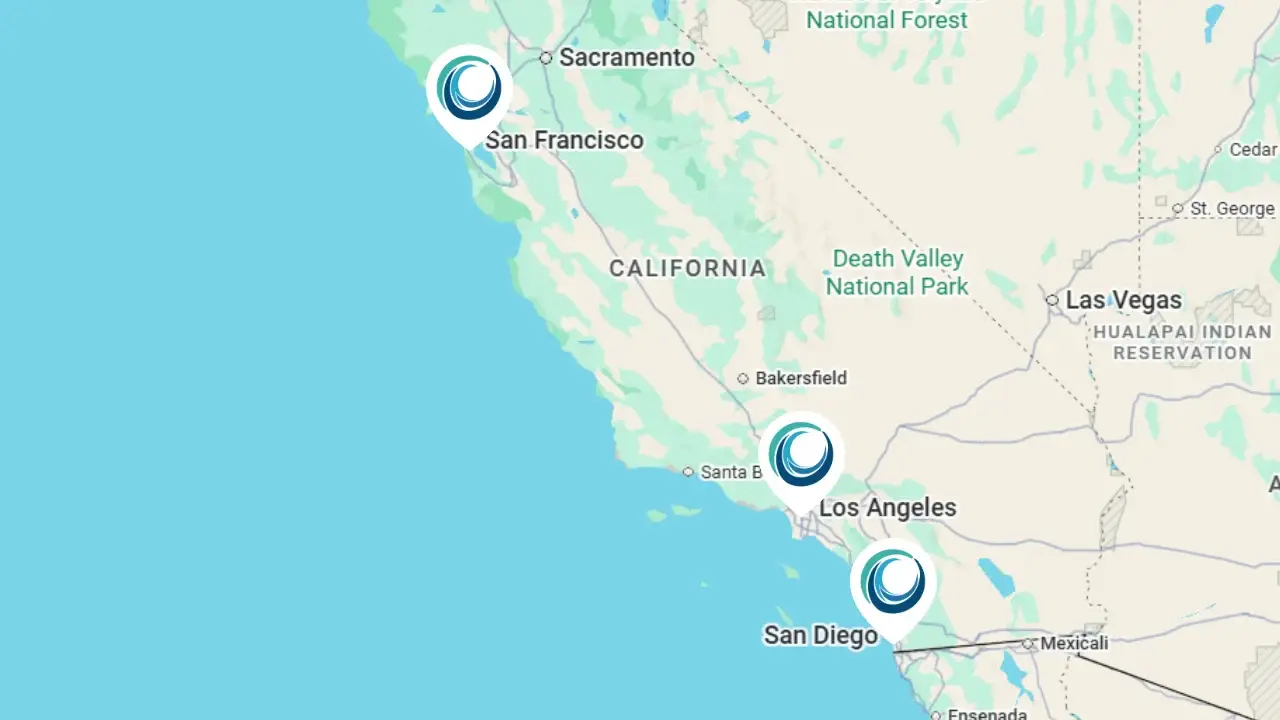
With locations in San Diego, Orange County, and San Francisco, Optima offers fractional CFO, HR, and professional accounting services for manufacturers throughout all of California and the United States.